How to Winterize a Water Heater (Cabin and Freeze Guide)
Drain a tank water heater and leave it empty for freeze season. Covers cabins, vacant houses, vacation mode vs a full drain, and a safe spring restart.

September 4, 2026
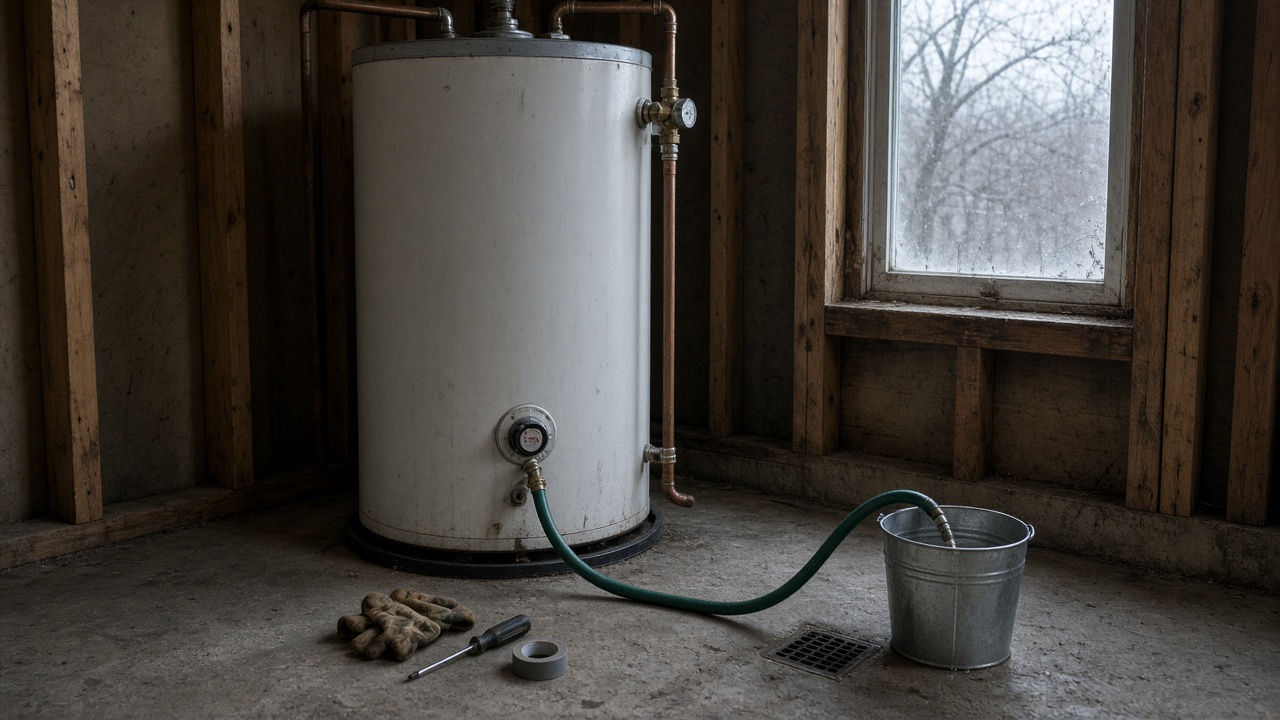
Safety Disclaimer
Water heater maintenance involves working with pressurized systems, scalding hot water, and potentially hazardous electrical or gas connections. Always shut off power (electric heaters) or gas supply (gas heaters) and allow water to cool to a safe temperature before beginning any maintenance. Wear appropriate safety equipment including gloves and eye protection. If you're uncomfortable with any step, contact a licensed plumber.
Unique angle here: empty the tank and leave it empty until the building is warm — not a flush-and-refill. A regular drain you refill the same day is how to drain a hot water heater. A house that stays lived in uses the seasonal maintenance schedule.
Desk note: Time bands below are research ranges from manufacturer drain-and-shutdown labels and cabin-closing writeups, not a stopwatch on your cottage. This is a HowToDrainAHotWaterHeater.com Editorial Team research-desk sequence, not a shop diary and not a claim that this desk winterized a test fleet.
Winterizing a water heater is not the same job as draining it for maintenance. A flush empties the tank, rinses sediment, and fills it again so you can take a shower that night. Winterizing empties the tank and leaves it empty until the building is warm. The failure mode you are preventing is ice, not scale.
Cottage owners, lake-house regulars, and anyone shutting a vacant house ask the same question every fall: do I drain the water heater, or do I just flip a breaker? The answer depends on whether the room around the tank can drop below freezing. Manufacturer manuals for tank heaters say to shut off power and drain the unit completely when a building will sit unoccupied in cold weather. They do not tell you to drain a heated primary home for a week at the beach.
This guide is the decision tree and the empty-tank procedure. It is written from those manuals, cabin-closing checklists, and the restart mistakes that show up after spring: dry-fired elements, a drain valve left open, a pilot that will not light.
Before You Drain for Freeze
Do this in order. Opening a hose “just in case” on a heated primary home is how people add a leaky plastic valve and a dry-fire chance for a week at the beach.
- Decide room temperature, not the calendar. Heated house above 32°F: Vacation / Pilot or breaker off — do not drain. Unheated cabin, vacant house, or a garage that can hit freezing: empty the tank and leave it empty. The lived-in yearly table is annual water heater maintenance checklist. Fuel-specific extras: gas vs. electric maintenance.
- Do not treat popping or rusty water as a winterize step. Those are flush signals on signs your water heater needs flushing. Winterize is ice, not scale. Method if you still live there: how to flush.
- Look at the drain valve before you force it. A brittle or already-dripping plastic valve on closing weekend is a flood in a building you are about to abandon. Unclog and swap pages stay on how to unclog a water heater drain valve and how to replace a water heater drain valve.
- Then open a listing only for the empty-tank path. A Flexzilla 5/8-inch by 50-foot garden hose is the hose this site already points at: garden-hose thread, stays flexible in a cold utility room. A garden hose cap is the spring backstop already used on this site if the seat weeps after you close the valve — not a substitute for a working valve. The Govee WiFi water leak detector three-pack is the pan-and-puck set already used on this site if anyone will refill before the building is occupied. A tagged water-heater drain hose search is safer than guessing an RV-antifreeze-kit ASIN.
Listing check (cabin hose, not RV antifreeze): confirm a garden-hose-thread drain hose plus a floor or pan leak puck — RV winterize kits and pink antifreeze gallons share the same cabin-closing search.
Money story: how we make money. Parts bin: water heater maintenance tools.
Winterize vs a Regular Drain
Keep the two jobs separate or you will do the wrong last step.
| Goal | Empty the tank? | Refill before you leave? | Power / gas |
|---|---|---|---|
| Annual flush | Yes, then rinse | Yes | Restore after the tank is full |
| Repair (element, valve, anode) | Yes, or below the part | Yes, after the part is in | Restore after the tank is full |
| Moving or replacing the unit | Yes | No | Stay off |
| Winterize an unheated building | Yes | No | Stay off all winter |
| Short vacation in a heated house | No | Tank stays full | Vacation / Pilot, or breaker off |
If your plan is sediment removal, stop and use the flushing guide or how often to flush. Those pages assume you refill. This page assumes you do not.
The other distinction: a winterized tank is still a steel vessel with an anode rod in damp air. Leaving it empty for three months is normal seasonal practice. Leaving it empty for years with a wet bottom and no anode check is how you come back to rust.
Do You Actually Need to Drain It?
Most winter “water heater” questions are really freeze questions. Start with the room, not the calendar.
Heated house, you are gone a weekend or a week. Do not drain. Water sitting in a tank that stays above 32°F does not freeze. Draining adds leak risk at a plastic drain valve and a dry-fire risk when someone restores power later. For energy, use Vacation mode on a gas control, or switch the electric breaker off. That matches the short-trip advice in our water heater safety guide.
Heated house, you are gone a month. Still do not drain if the thermostat stays on and someone can check the house. Shutting the main water valve is the leak-control move. If you shut the main, shut the heater’s energy source too. A tank that loses water while the elements or burner stay live is how you dry-fire.
Unheated cabin, cottage, or vacant house. Drain the tank. Ice expands. A 40- or 50-gallon tank that freezes does not just “maybe leak.” It can split the lining, jam the drain valve, or push fittings. Cabin-closing writeups treat the water heater as a required drain, not an optional extra.
Occupied house, tank in an unheated garage or crawl space. This is the case people miss. The living space is warm. The garage is not. If that room can hit 32°F, treat the heater like a cabin tank: drain it, or keep that room above freezing with a reliable heat source. Foam on the pipes is not enough if the tank itself is full of water in a 10°F garage.
Tankless unit. There is no storage tank to split, but there is a heat exchanger that holds water. Many gas tankless heaters have electric freeze protection that only works with power on. If you kill the breaker on a winterized cabin, you have to drain the unit at the service valves and follow the manufacturer’s freeze section. Do not assume “tankless” means “immune.”
If you are unsure whether the space stays above freezing, drain. An empty tank is recoverable. A cracked tank is a replacement.
What You Need
You do not need a special winterize kit for a residential tank. You need a path for 40 to 80 gallons of water and a way to keep the energy source off.
- Flat-head screwdriver (many drain valves are slotted, not handled)
- Garden hose long enough to reach a safe discharge point
- Bucket for the last drips and for checking what comes out
- Work gloves
- Tape and a marker for the breaker or gas valve
- Towels
- A leak alarm if the house will sit empty after you refill in spring
A Flexzilla 5/8-inch by 50-foot garden hose is the hose this site already points at because it stays flexible in a cold utility room and uses standard garden-hose thread. Cheap vinyl hose kinks on the way to a cabin window. If the heater has no nearby floor drain, use the hose-to-window, utility-sink, or pump methods in how to drain a water heater with no floor drain.
A garden hose cap is worth tossing in the same bucket. After you close the valve in spring, the cap is a cheap backstop if the seat weeps. It is not a substitute for a working valve.
If the drain valve is plastic, brittle, or already dripping, read how to unclog a water heater drain valve before you force it. Breaking that fitting on closing weekend, with the tank still full, is a flood in a building you are about to abandon.
Shut Down Power or Gas First
Do this before the hose goes on. An electric element that fires in air is scrap. A gas burner under an emptying tank overheats the steel.
Electric tank. Find the double-pole breaker labeled for the water heater and switch it off. If the panel labels are a mess, treat any unlabeled 30-amp double breaker as a suspect and confirm at the unit. Some installs also have a disconnect next to the heater. Switch that off too. Tape the breaker in the off position and write “tank empty” on the tape. The person who opens the cabin in April is not always the person who closed it in October.
Gas tank. Turn the control knob to Off, not just down to a low temperature. Vacation or Pilot is for a heated house you will return to soon. Off is for a building you are draining. If you are not going to relight a pilot in the dark in April, Off is the honest setting. Follow the label on the unit. If you smell gas at any point, stop, leave, and call the gas utility from outside. That is a safety problem, not a winterize step.
Heat pump / hybrid tank. These still have a tank and a drain valve. They also have a compressor and, on many models, a condensate line. Kill power at the breaker. Drain the tank the same way. Do not leave standing water in a condensate trap in an unheated room if that trap can freeze; follow the unit’s winter section.
Close the cold-water shutoff on the inlet at the top of the tank. If the cabin has no dedicated inlet valve, shut the main or the well pump first. Opening a drain valve on a tank that is still fed from the well just empties the well into the floor.
Let the tank cool. Two to three hours is the usual wait after you kill the heat source. Overnight is better if you can spare it. Closing-weekend water is still hot enough to scald, and hot discharge will warp cheap hose.
Drain the Tank Completely
The mechanical steps match a normal drain. The intent does not. You are going to empty, not rinse-and-fill.
- Connect the hose to the drain valve near the bottom of the tank. Hand-tight is enough on a plastic valve. Run the other end to a floor drain, a slop sink, or outdoors, downhill the whole way. Gravity is the pump.
- Open a hot-water faucet somewhere in the building. On a cabin with the pump already off, open the hot side closest to the heater and one more fixture if you have it. Air has to enter or the tank will gurgle and stop. The same vacuum problem is why a water heater will not drain during a regular flush.
- Open the T&P relief valve briefly if the faucet does not break the vacuum. Lift the lever and let it snap back. If it will not move, do not force a seized lever until the tank is depressurized another way. Testing and replacement are covered in the T&P valve guide.
- Open the drain valve slowly. The first gallons are often cloudy or rusty. That is sediment, not a reason to stop. A 40-gallon tank is commonly 20 to 40 minutes. A neglected 50-gallon tank with a packed valve can take longer.
- When the hose slows to a trickle, crack the cold inlet for 10 to 20 seconds with the drain still open, then shut the inlet again. That short burst stirs the last loose grit. Do it once or twice. You are not doing a full maintenance flush. You are getting the tank closer to empty.
- Disconnect the hose. Catch the last cup in the bucket. A tank that “looked empty” still holds a surprising amount in the bottom dome and in the dip tube.
If nothing comes out, stop and treat it as a clog, not a mystery. Water heater not draining and the unclog page exist for that. Forcing a plastic valve on a full tank is how closing day becomes a plumber call.
Electric tanks have a second dry-fire reminder here. The lower element sits near the bottom. If you only drained “most” of the water and someone later flips the breaker, that element is the one that dies. Empty means empty.
Leave the Tank Empty the Right Way
This is the part maintenance guides get wrong for winter, because they always tell you to close everything and refill.
Leave the drain valve cracked open. A fully closed valve plus a few leftover ounces of water is still a freeze risk in the valve body. Crack it open and put the bucket or a shallow pan under it. If the cabin has mice or a dirt floor, a pan beats dripping onto insulation.
Leave one hot faucet open. That keeps the tank vented. If anything in the hot side later expands or weeps, it is not a closed steel bottle.
Do not leave the cold inlet open to a live supply. The inlet valve and the well pump or main stay off. An open inlet on a live supply refills the tank while you drive home.
Bypass the tank if you will pump antifreeze through the house lines. Plenty of cabins have a three-valve bypass, or a kit, so pink RV antifreeze never enters the heater. Use it. The tank should be empty and isolated. The lines get the antifreeze. Do not pour propylene glycol into the tank “to be safe.” You then own a 50-gallon contamination problem in spring, and you still had to drain the tank first.
Do not use automotive antifreeze. Ethylene glycol is toxic. Cabin plumbing advice that mentions antifreeze means the non-toxic RV / marine propylene glycol sold for potable systems, and even that belongs in traps and lines, not in the heater.
Look at the anode while the tank is empty. Overhead clearance is the usual fight. If you can get the rod out, check diameter and whether the steel core is showing. Replacement steps are in anode rod replacement. If you cannot get it out this weekend, you still winterized. Put “anode” on the spring list.
Tape a note on the tank. “Empty. Do not restore power until full.” Date it. The breaker tape and the tank note are redundant on purpose.
Winterize the Rest of the Hot Side
The heater is one vessel. The hot pipes are another.
After the tank is empty, open the remaining hot faucets, starting high and working down, so branch lines drain. Open the lowest hose bib or boiler drain on the hot side if the cabin has one. A water heater bypass does not drain a trapped drop in a second-floor bathroom.
Heat-trap nipples and dip tubes hold a little water. You will not get every teaspoon out of a residential tank without pulling fittings. That is why the drain valve stays cracked and a faucet stays open. The leftover film can freeze in a shallow puddle at the bottom without the same force as a full tank. A sealed, nearly full tank is the dangerous case.
If the water heater sits in a garage you are not draining because the house stays heated, insulate the inlet and outlet pipes and the first few feet of exposed line. The insulation guide is about standby loss, but the same foam sleeves help a pipe that sees 20°F air. They do not protect a full tank.
Put a leak detector in the pan or on the floor before you lock the door if anyone will refill before the building is occupied. The Govee WiFi water leak detector three-pack is the unit this site already uses in the leak-detector roundup. One sensor in the pan is enough for a cabin reopen. Compare options in best water leak detectors.
Tankless, Heat Pump, and Garage Heaters
Tankless. Close the isolation valves. Open the service ports and drain per the manual. If the cabin loses power all winter, do not rely on the built-in freeze heaters. Those heaters are electric. A gas tankless with the breaker off in a 0°F mechanical room is a cracked heat exchanger waiting to happen. A tankless flush kit is for descaling, not for freeze-up. Use it in the fall if the unit is due, then drain it for storage.
Heat pump water heater. Drain the tank. Clear or protect the condensate path. These units are often in basements that stay above freezing even when the upstairs is set back. If that basement stays warm, you may not need a full winterize. If it is a cottage basement with the heat off, drain it.
Garage tank on a primary home. Homeowners in cold climates leave these full all winter because “the house is on.” The garage is not the house. If you can see your breath in that garage, drain the tank or add a safe heat source and a freeze alarm. A tank that freezes in January and thaws in a March warm spell can leak into a parked car and a living-room ceiling at the same time.
RV and camper heaters. Those are a different drain plug and usually a bypass for antifreeze. This article is the residential tank. Do not treat a 6-gallon RV heater like a 50-gallon basement tank, and do not treat the basement tank like an RV.
Common Mistakes That Ruin a Tank
Restoring power on an empty tank. This is the expensive one. It shows up in spring, or when a helpful neighbor “turns the water heater back on” after you mentioned you drained it. Electric elements fail immediately. See no hot water after flushing if the restart already happened and the tank is silent.
Closing the drain valve on a tank that is not actually empty. The hose stopped. The bottom dome did not. Crack the valve and leave it.
Draining a heated primary home “just in case.” You gain almost nothing and you add a leaky valve and a dry-fire chance. Vacation mode exists for this.
Leaving the well pump on. The tank refills overnight. You winterized a full tank.
Forcing a seized plastic drain valve. Replace it on a drained tank, or stop. Drain valve replacement is a separate job. A brass ball valve is the usual upgrade when the factory plastic one is done. The Camco brass drain valve is the common 1/2-inch garden-hose-thread replacement already used on this site.
Antifreeze in the tank. Empty plus bypass. Not pink soup.
Ignoring a gas smell or a disconnected vent. Winterize does not include “relight it and see.” If the vent is loose or you smell gas, that is a stop.
How to Restart in Spring
Treat reopen like a new fill after a drain, because that is what it is.
- Walk the building. Confirm heat is on if that is how you keep pipes safe. Confirm the well or municipal supply is live only when you intend to fill.
- Close the drain valve firmly. Remove the hose if you left it on. Wipe the threads and look for cracks in a plastic valve body that sat open all winter.
- Close the T&P lever if you left it up.
- Open the cold inlet. Leave a hot faucet open. You should hear the tank fill. The faucet will spit air, then sputter, then run a solid stream.
- Wait. A 50-gallon tank is not full because the pipe hissed for 30 seconds. Keep the faucet open until the stream is steady and air-free for at least a minute.
- Inspect the drain valve, inlet, and T&P discharge for drips. A winter-open valve sometimes weeps on the first fill. Open and close it once to clear grit. If it keeps dripping, cap it as a temporary backstop and plan a replacement.
- Only then restore energy. Electric: breaker on. Gas: follow the lighting instructions on the label. If the pilot will not stay lit, use the pilot light troubleshooting guide instead of holding the knob and hoping.
- Give the tank time to heat. Electric recovery is often an hour or more. Do not decide the element is dead in the first 15 minutes.
If the tank fills and you still have no hot water, do not keep flipping the breaker. Hot water heater not working and the electric-specific drain and restart notes cover the usual causes: a tripped high-limit, a dry-fired element, a gas control that was left on Off.
After the first heat-up, run a hot faucet and look at the water. Brown or rusty color after a long sit is common for a few minutes and should clear. If it does not, use why hot water is brown or rusty.
Skip the Cabin Drain, Call a Plumber
Call before you leave, not from the highway.
- You smell gas, or the vent is disconnected — that is water heater safety, not a closing-day experiment
- The drain valve will not open, or it crumbles
- The tank is already leaking at the jacket or the very bottom. That is a failed tank. Winterizing a leaking tank is damage control, not a save. See leaking from the bottom
- You have a gas unit and you are not comfortable lighting the pilot in spring
- The cabin plumbing has no bypass and you were told to “just pump antifreeze through everything,” including the heater
- The heater is in an attic or on a second-story platform and you do not have a downhill hose path
A licensed plumber who already winterizes cabins in your area will drain the heater as part of a whole-house close. That is a reasonable hire if you only visit twice a year and the last person who touched the drain valve was a previous owner. Symptom index: troubleshooting.
Frequently Asked Questions
Do I need to drain my water heater before a normal vacation?
No, not if the house stays heated above freezing. Set a gas unit to Vacation or Pilot, or flip the electric breaker off. Drain the tank only when the building itself will sit unheated, or when the heater is in a space that can drop below 32°F.
Should I leave the drain valve open after winterizing?
Yes. After the tank is empty, leave the drain valve cracked open and leave one hot faucet open. Residual water that later freezes then has somewhere to go instead of splitting the tank or a fitting.
Can I pour RV antifreeze into a water heater tank?
Do not fill a residential tank with antifreeze. Drain it empty and bypass it if you are pumping antifreeze through the house lines. The tank is a potable vessel. Residual antifreeze is hard to flush and is not a substitute for an empty tank.
What happens if I turn the power back on before the tank is full?
Electric elements dry-fire and burn out in seconds. Gas burners can overheat an empty or half-empty tank and crack the glass lining. Refill completely, purge air at a hot faucet, then restore power or gas.
How long does it take to winterize a tank water heater?
Plan on two to three hours of cooldown, then 30 to 60 minutes to drain, plus time to route a hose. Restart in spring takes about as long as a refill, then one to two hours for the tank to heat.
Related Guides
- Annual Water Heater Maintenance Checklist
- Gas vs. Electric Water Heater Maintenance
- Water Heater Maintenance Schedule Checklist
- 5 Signs Your Water Heater Needs Flushing
- How to Drain a Hot Water Heater
- How to Drain an Electric Hot Water Heater
- How to Drain a Water Heater With No Floor Drain
- Water Heater Not Draining
- No Hot Water After Flushing
- Water Heater Safety
- How to Flush Hub
- Water Heater Maintenance Tools
- Water Heater Troubleshooting
- How We Make Money
Sources
- A. O. Smith, How to Drain & Flush a Water Heater, manufacturer drain and power-off sequence
- Rheem product support, tank maintenance and shutdown notes in residential manuals
- U.S. Department of Energy, Water Heating, operating-cost context for turning a heater down or off
- Water Systems Council, Winterizing and De-winterizing, seasonal-property plumbing shutdown, including the water heater drain
Editorial Team
Nobody should pay a plumber $300 to turn a drain valve. Our guides are built from manufacturer documentation, plumbing code references, and the documented experience of homeowners and plumbers.