Water Heater Making Noise: Troubleshooting Guide
Water heater making noise? Identify popping, rumbling, screeching, humming, and knocking sounds. Each noise has a specific cause and fix.

May 25, 2026
Safety Disclaimer
Water heater maintenance involves working with pressurized systems, scalding hot water, and potentially hazardous electrical or gas connections. Always shut off power (electric heaters) or gas supply (gas heaters) and allow water to cool to a safe temperature before beginning any maintenance. Wear appropriate safety equipment including gloves and eye protection. If you're uncomfortable with any step, contact a licensed plumber.
Your water heater is talking to you. Every sound it makes has a specific cause, and knowing what each noise means is the difference between a $0 DIY fix and a $2,000 emergency replacement.
This guide covers every common water heater noise, what causes it, how serious it is, and exactly how to fix it. We’ve organized the noises from most common to least common, so you can quickly find your specific sound and take action. Unique angle here: popping vs hammer vs sizzle, each with a different fix. The popping-only explainer is Water Heater Making Popping Noises.
Popping or Crackling
What it sounds like: Rhythmic popping, like popcorn. May be a single pop every few seconds or a rapid series of pops. Usually occurs shortly after the burner fires or the heating element turns on.
What causes it: Sediment buildup at the bottom of the tank. Minerals (calcium and magnesium) precipitate out of heated water and settle on the tank floor. When the burner heats water trapped beneath this sediment layer, steam bubbles form and pop as they rise through the sediment.
How serious is it: Not immediately dangerous, but it signals a maintenance need. Untreated sediment insulates the tank bottom from the heat source, forcing the burner to work harder and overheating the steel. Over time, this weakens the tank and leads to premature failure.
How to fix it: Flush the tank. Our complete guide to draining your water heater walks through the full process. For light sediment, a quick 5-10 minute flush through the drain valve works. For heavy buildup, do a full drain and flush.
If flushing doesn’t stop the popping, the sediment may have hardened into calcite. Try a back-flush technique or a vinegar soak to dissolve the deposits.
Prevention: Flush your tank annually. In hard water areas, every 6 months. See our signs your water heater needs flushing for other indicators.
For a deeper look at popping specifically, see our dedicated water heater popping noise guide.
Rumbling or Low Growl
What it sounds like: A low, continuous rumble or growling sound. Deeper than popping. Sometimes described as a rolling boil sound.
What causes it: The same root cause as popping: sediment. Rumbling indicates a thicker sediment layer than popping does. The sound is created by large volumes of water shifting and churning beneath and through the sediment during heating cycles.
How serious is it: More serious than popping. A rumbling heater has significant sediment accumulation. The tank bottom is likely overheating during every heating cycle, which accelerates corrosion and shortens the tank’s life.
How to fix it: Full drain and flush. If the sediment is severe, you may need to repeat the flush cycle multiple times. Open the drain valve and run cold water through the tank until the discharge runs clear. If the drain valve clogs (common with heavy sediment), see our guide on how to unclog a water heater drain valve.
When to call a pro: If the rumbling continues after thorough flushing, the sediment may be too hardened to remove through normal methods, or the tank bottom may be compromised. A plumber can assess whether the tank is still serviceable.
Screeching, Screaming, or High-Pitched Whistling
What it sounds like: A high-pitched whistle or screech. May be constant or intermittent. Often louder than other water heater noises.
What causes it: Restricted water flow through a valve that is partially open. The most common sources:
- Temperature and pressure (T&P) relief valve partially opening due to excess pressure
- Inlet valve not fully open after maintenance
- Drain valve slightly open or not fully sealed
How serious is it: Depends on the source. If the T&P valve is screaming, your tank pressure may be too high, which is a safety concern. If it’s an inlet or drain valve, it’s annoying but not dangerous.
How to fix it:
- Check the T&P valve. If it’s discharging water or steam, there’s excess pressure or temperature in the tank. Lower the thermostat to 120°F. If the valve continues to discharge, the valve may be faulty or the tank may have an expansion issue. See our water heater safety guide for next steps.
- Check all valves. Make sure the cold water inlet valve is fully open. Check that the drain valve is fully closed.
- Check the water pressure. If your home’s water pressure exceeds 80 PSI, install a pressure reducing valve on the main water line. High pressure stresses the T&P valve and the tank.
Humming or Vibrating
What it sounds like: A steady hum or vibration. Common in electric water heaters. May feel like a vibration when you touch the tank.
What causes it: In electric heaters, the upper or lower heating element vibrates when it activates. This vibration transfers to the tank and sometimes to connected pipes. It’s caused by water flowing around the element, creating turbulence that makes the element oscillate.
How serious is it: Not serious at all. This is a normal operating sound for some electric heaters. However, if the humming has recently gotten louder, the element may be loosening.
How to fix it:
- Tighten the heating element. Turn off power to the heater, remove the access panel, and use an element wrench to snug the element. Don’t overtighten.
- If tightening doesn’t help, the element may be partially encased in sediment. Flushing the tank and cleaning the element (or replacing it) resolves this.
For element testing and replacement, see our guide on how to test a water heater element.
Ticking or Tapping
What it sounds like: Rhythmic ticking, similar to a clock. May also sound like light tapping on metal.
What causes it: Thermal expansion. When the burner heats the tank, the metal expands. When it cools, it contracts. This expansion and contraction creates ticking sounds as the tank shifts slightly against its fittings, or as hot pipes rub against wood framing, clips, or pipe hangers.
How serious is it: Not serious. Thermal expansion ticking is completely normal and has no effect on the tank’s function or lifespan.
How to fix it: If the ticking bothers you:
- Install foam pipe insulation on exposed pipes near the tank. This dampens the sound of pipes ticking against framing.
- Check that the tank is sitting level and stable on its platform. An uneven tank may shift more during thermal cycles.
- If the ticking is from the tank itself, check the heat trap nipples (the short pipes connecting the cold inlet and hot outlet). Some heat trap designs create more thermal expansion noise than others. Replacing them with dielectric nipples may reduce the sound.
Banging or Water Hammer
What it sounds like: A single loud bang or a series of rapid bangs. Usually occurs when a faucet, dishwasher, or washing machine valve closes suddenly.
What causes it: Water hammer, a pressure wave caused by the sudden stoppage of water flow. When a fast-closing valve (like a solenoid in a washing machine) snaps shut, the moving water has nowhere to go. The resulting pressure wave reverberates through the pipes.
How serious is it: Water hammer itself doesn’t damage the water heater, but repeated pressure waves can loosen pipe connections over time. It can also be extremely annoying.
How to fix it:
- Install a water hammer arrestor near the fixture causing the banging. These small devices absorb the pressure wave. They mount inline on the supply pipe. Cost: $10-$30 each. Water Hammer Arrestor on Amazon
- Check for a thermal expansion tank. If your home has a closed plumbing system (with a check valve or pressure reducing valve on the main line), thermal expansion from the water heater can contribute to water hammer. An expansion tank absorbs the pressure increase.
- Secure loose pipes. Banging may be amplified by pipes that aren’t properly strapped to framing. Add pipe straps or foam padding where pipes pass through holes or hang unsupported.
Sizzling or Hissing
What it sounds like: A sizzle or hiss, similar to water dropping on a hot surface.
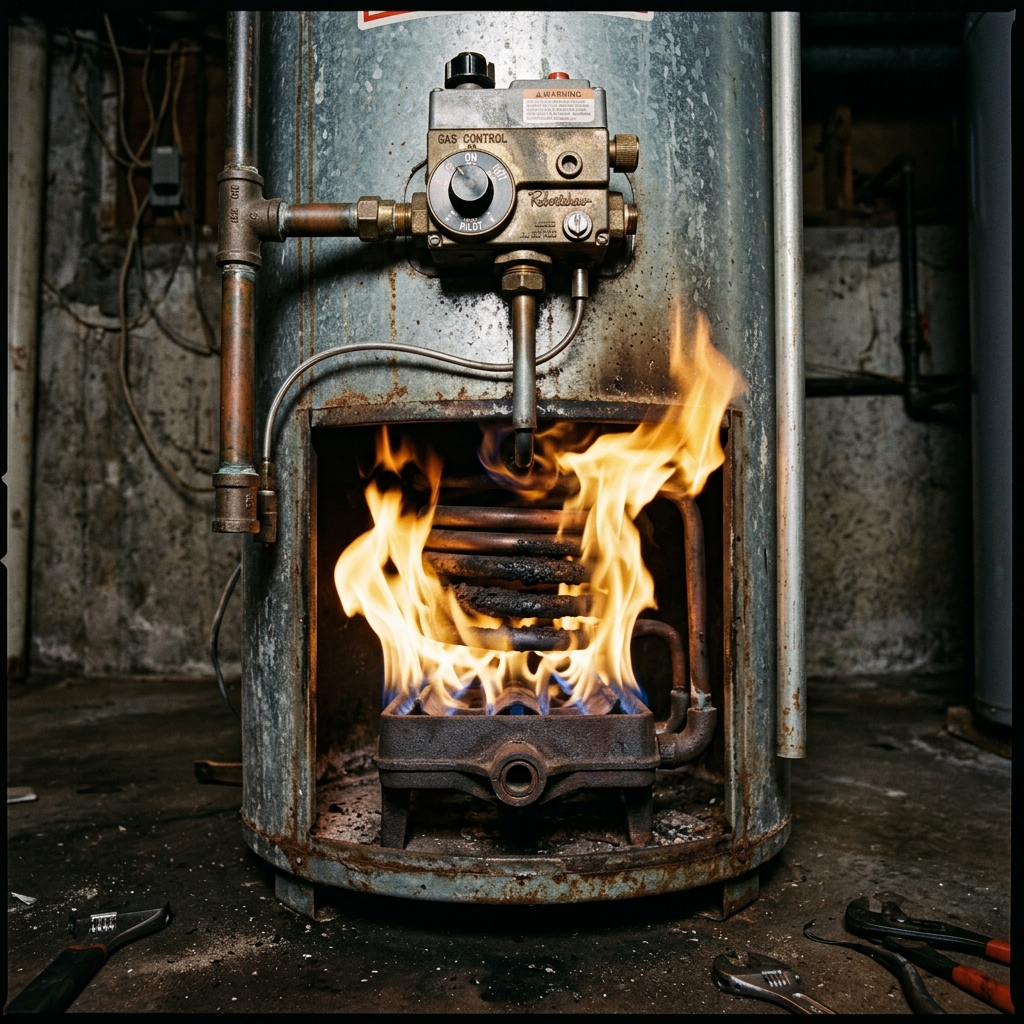
What causes it: Condensation dripping onto the burner assembly (gas heaters). This happens when cold water enters the tank and causes moisture to condense on the cooler outer surfaces of the tank. The condensation drips down onto the burner and sizzles.
How serious is it: Normal during heavy draw periods (long showers, filling a bathtub). If it happens continuously, the tank may be leaking onto the burner, which is a different and more serious issue.
How to fix it: If the sizzling only occurs during or shortly after heavy hot water use, it’s normal condensation and requires no action. If the sizzling is constant, inspect the tank for leaks. Check the drain valve for leaking, the T&P valve, and all pipe connections. Water on the burner from a tank leak needs immediate professional attention.
A Noise Diagnosis Quick Reference
| Sound | Most Likely Cause | Urgency | Fix |
|---|---|---|---|
| Popping | Sediment | Moderate | Flush tank |
| Rumbling | Heavy sediment | High | Full drain and flush |
| Screeching | Restricted valve | High | Check T&P and inlet valves |
| Humming | Element vibration | Low | Tighten element |
| Ticking | Thermal expansion | None | Normal, insulate pipes |
| Banging | Water hammer | Low | Install arrestor |
| Sizzling | Condensation | Low | Normal during draws |
When to Replace Instead of Repair
If your water heater is making multiple noises, especially a combination of rumbling and popping alongside any of these warning signs, it may be time to replace rather than repair:
- Tank is more than 10-12 years old
- Rust-colored water from the hot side only
- Visible rust or corrosion on the tank exterior
- Water pooling around the base of the tank
- The anode rod is fully depleted
For an overview of failure signs, see our guide on signs your water heater is failing.
Related Guides
- Annual Water Heater Maintenance Checklist - Prevent most noise issues
- How to Flush a Water Heater - The fix for most noise problems
- Water Heater Temperature Settings - Lower temps reduce noise-causing sediment
Sources
- International Association of Certified Home Inspectors - Noise diagnosis standards
- U.S. Department of Energy - Sediment impact on efficiency
Editorial Team
Nobody should pay a plumber $300 to turn a drain valve. Our guides are built from manufacturer documentation, plumbing code references, and the documented experience of homeowners and plumbers.