Electric vs. Gas Water Heaters: Cost, Efficiency, and Performance Compared
Gas heats faster and costs less to operate. Electric is safer and cheaper to install. Here is the full comparison.

May 10, 2026
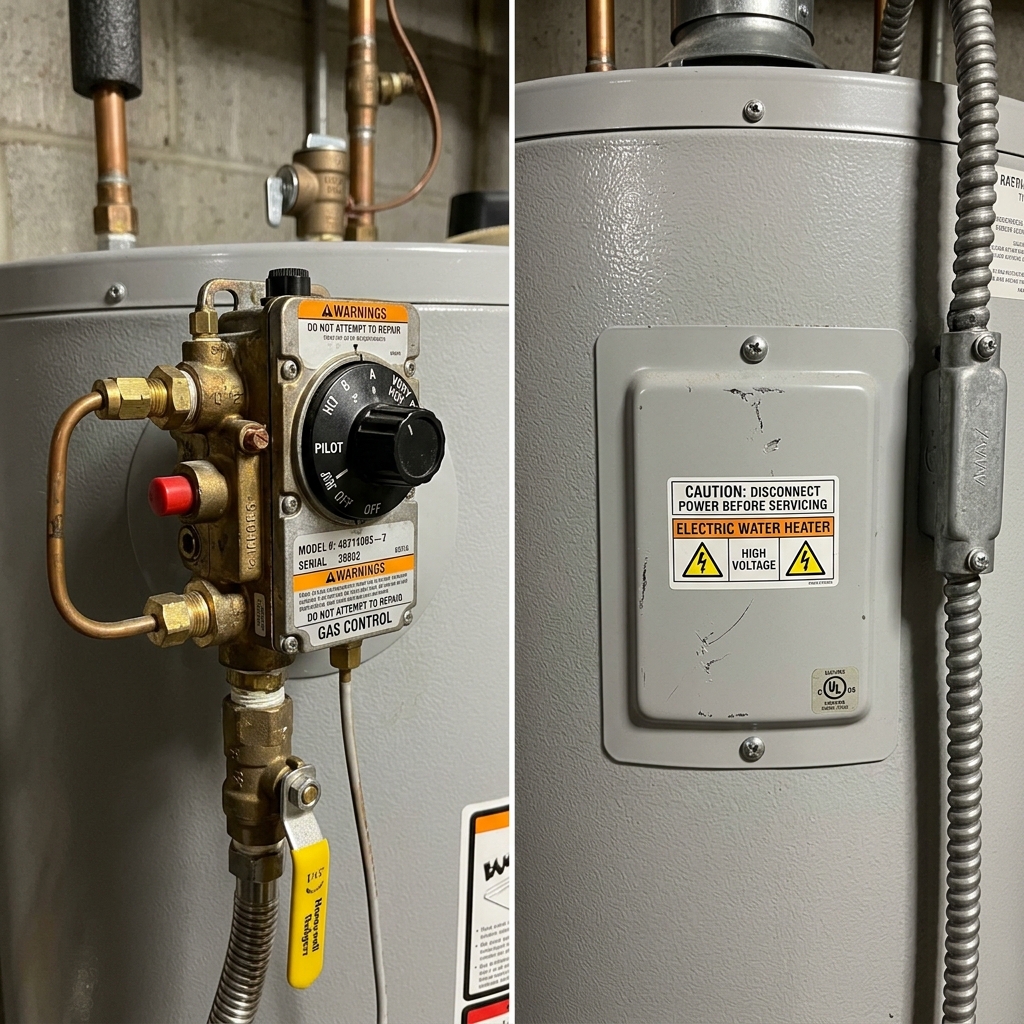
Safety Disclaimer
Water heater maintenance involves working with pressurized systems, scalding hot water, and potentially hazardous electrical or gas connections. Always shut off power (electric heaters) or gas supply (gas heaters) and allow water to cool to a safe temperature before beginning any maintenance. Wear appropriate safety equipment including gloves and eye protection. If you're uncomfortable with any step, contact a licensed plumber.
Unique angle here: the cost table and when-to-choose lists. The longer comparison is Electric vs Gas Water Heater: Complete Comparison Guide.
Desk note: Dollar and efficiency figures below are research ranges from typical EnergyGuide / listing cards and published DOE water-heating language, not a utility bill from this desk and not a lab AFUE run. A 50-gallon gas tank does not “always” beat electric on cost if your gas therm is expensive or you need a new vent. Conversion costs are estimates, not quotes.
Fuel is a recovery and infrastructure decision before it is a brand SKU. Household-fit tank vs tankless is a separate chooser: tank vs tankless. If the current tank is already leaking at the shell, stop comparing fuels and walk DIY vs plumber.
Before You Shop a Fuel
Do this in order. Buying the heater first is how people end up with a 240-volt 50-gallon tank on a 30-amp closet circuit, or a gas unit that needs a new B-vent they did not budget.
- Read the current rating plate. Copy fuel, gallons, voltage or BTU, and vent type (atmospheric, power-vent, direct-vent). Same footprint and same fuel is a replacement. A fuel change is a conversion.
- Confirm the infrastructure you already have. Gas needs a sized supply and a legal vent path plus combustion air. Electric needs a dedicated 240-volt circuit at the amperage on the plate. “We have a gas stove” is not a water-heater gas line.
- Measure incoming cold-water temperature in winter. A Taylor instant-read waterproof thermometer in a glass at the nearest cold tap, after a 30-second run, is enough. Groundwater at 40°F vs 70°F changes recovery feel more than the gallon stencil does.
- Count the peak hour, not the people. Overlapping showers plus a dishwasher is a first-hour problem. Size that hour in what size water heater do you need before you pick gas for “faster” or electric for “cheaper to install.”
- Then open a listing. Search pages mix 120-volt point-of-use tanks, 80-gallon hybrids, and atmospheric gas units on the same brand page.
Listing check (electric vs gas fuel): confirm the EnergyGuide fuel, voltage or BTU, and vent type match the plate you copied — 120-volt RV / point-of-use tanks and 240-volt residential electrics share the same brand search.
Maintenance after you pick a fuel is gas vs electric maintenance.
How Each Type Works
Gas Water Heaters
A burner under the tank heats water. Combustion gases leave through a flue. That is why recovery is usually faster than a same-gallon electric: more heat into the water per hour, not because gas “is more efficient.” Gas units need a supply, a vent that matches the appliance, and combustion air. Standing-pilot atmospheric tanks can still make hot water in a power outage. Power-vent and direct-vent units often need electricity for the blower.
Electric Water Heaters
One or two immersion elements heat the water directly. No flue. Installation is a 240-volt circuit and plumbing, which is why the install research range is usually lower than gas. Recovery is slower on a typical 4500-watt pair than on a 40,000-BTU burner. Elements and thermostats are replaceable parts — how to test a water heater element — so a dead electric tank is not automatically a new heater.
Cost Comparison (Research Ranges)
Treat the table as a first filter. Local gas and electric rates move the operating column more than the unit column.
| Factor | Gas | Electric |
|---|---|---|
| Unit cost (research) | $600–$1,800 | $400–$1,200 |
| Installation (research) | $800–$1,500 | $300–$800 |
| Annual operating (research) | $250–$350 | $400–$550 |
| Recovery rate (typical 50-gal) | 40–50 GPH | 20–25 GPH |
| Published tank window | 8–12 years | 10–15 years |
| Conversion efficiency (typical published) | ~60–70% standard gas | ~90–95% resistance electric |
The Paradox, Without a Guarantee
Electric resistance turns most of the electricity into heat. Standard gas sends a share of the heat up the flue. Electricity still often costs more per delivered BTU than natural gas, which is why the operating column above usually favors gas in markets where gas is the cheap fuel. That is EnergyGuide / rate-sheet logic, not a promise that your bill will land in the $250–$350 band.
A fuel swap (cap a gas line, add a 240-volt circuit, or add a vent) is a conversion ticket. The longer page walks those adders: electric vs gas complete comparison.
When to Choose Gas
- A correctly sized gas line and a legal vent already exist
- Peak-hour first-hour demand is high and you want the faster recovery column
- Your utility’s gas therm is the cheap heat in your market (read a bill, do not assume)
- You specifically want a standing-pilot atmospheric tank that can still heat during a power outage
When to Choose Electric
- No gas line, or the gas work would be the expensive part of the job
- You want the simpler install and you can live with slower recovery (or you sized FHR correctly)
- Space cannot take a flue (closet, interior room) and a power-vent is not in budget
- You want no combustion and no CO path in that room
- You are actually shopping a heat-pump tank, not a resistance electric — those are different machines
Heat Pump Water Heaters: The Third Option
Heat-pump (hybrid) tanks use electricity to move heat from room air into the water. Manufacturer and Energy Star language commonly puts them at roughly two to three times the efficiency of resistance electric. That is a COP story, not a desk measurement. Upfront research ranges often land around $1,200–$3,500 for the unit. They need air volume and they cool the space. They are a poor wrap-with-a-blanket candidate. Current models: best heat pump water heater 2026.
If fuel is decided and you only need a manufacturer, use best water heater brands of 2026.
Skip the Listing, Call a Plumber
- New gas line, new vent, or a panel upgrade for a larger electric or a hybrid
- Any smell of gas, a T&P that dumps steadily, or water from the steel shell
- A fuel conversion in a finished living space you cannot isolate if a fitting weeps
- A well or a tankless GPM problem you are trying to “solve” by switching fuels — that is a sizing page, not a fuel page
For living with the tank you already have, start at the how to flush hub or the compact hose-and-valve flush.
Related Guides
- Electric vs Gas Water Heater: Complete Comparison Guide
- Tank vs. Tankless Water Heaters
- Gas vs. Electric Water Heater Maintenance
- What Size Water Heater Do You Need?
- Water Heater Repair: DIY Fixes vs. When to Call a Plumber
- How to Flush Your Water Heater: Step-by-Step Guide
- Best Heat Pump Water Heater 2026
- Best Water Heater Brands of 2026
- Flush Schedule Calculator
- Water Heater Maintenance Tools
Sources
- U.S. Department of Energy, Water Heating, EnergyGuide / fuel and heat-pump context
- Manufacturer recovery and UEF / EnergyGuide cards (Rheem, A.O. Smith, Bradford White) for typical GPH bands
Editorial Team
Nobody should pay a plumber $300 to turn a drain valve. Our guides are built from manufacturer documentation, plumbing code references, and the documented experience of homeowners and plumbers.