Best Powered Anode Rods for Water Heaters
Powered anode rods last 20+ years and eliminate rotten egg smell. We compare Corro-Protec and alternatives using manufacturer specs and owner reports.

February 25, 2025
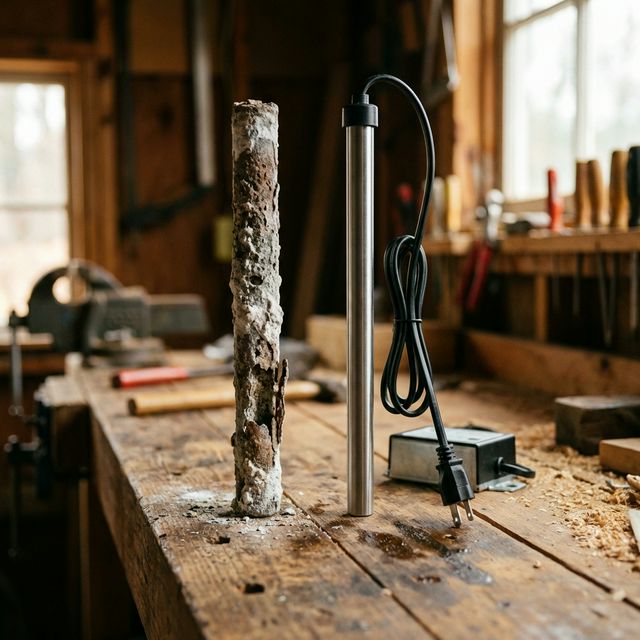
Your water heater’s anode rod is the one part that’s designed to fail. It corrodes so the tank doesn’t. The problem is that traditional sacrificial anode rods need replacement every 3 to 5 years, and most homeowners never check theirs. By the time you notice a problem, the rod is gone and the tank is rusting from the inside out.
Powered anode rods take a different approach. Instead of corroding to protect the tank, they use a low electrical current running through a titanium probe to create corrosion protection electronically. The titanium does not deplete. The rod does not dissolve. And the rotten egg smell that magnesium anodes can cause? Gone, according to the same sulfate-bacteria explanation manufacturers and owner reports use.
This is a research-desk comparison, not an in-house lab test and not an “expert tested in our workshop” diary. The notes below come from manufacturer warranties and install specs, plus the patterns owners report after swapping a spent magnesium rod. Replacement steps are in water heater anode rod replacement. Inspection timing is in when to replace your anode rod.
Here is how the two types compare, and which powered anode listings are worth opening.
Powered vs. Sacrificial Anode Rods
| Feature | Sacrificial (Traditional) | Powered (Electronic) |
|---|---|---|
| Material | Magnesium, aluminum, or zinc | Titanium (non-corroding) |
| Lifespan | 3 to 5 years | 20+ years |
| Maintenance | Check annually, replace when depleted | Plug in and forget |
| Rotten egg smell | Magnesium rods can cause it | Eliminates it |
| Cost | $15 to $40 per rod | $90 to $160 one-time |
| Energy cost | None | About $2 to $3 per year |
| Best for | Budget maintenance, specific water chemistry | Long-term protection, odor problems |
For a deeper look at when to replace sacrificial rods, see our When to Replace Your Anode Rod guide.
The Best Powered Anode Rods
1. Corro-Protec Powered Anode Rod (Top Pick)
Corro-Protec is the brand most residential listings point to. The full-size titanium probe is sold for 40- to 89-gallon tanks with a dedicated 3/4-inch NPT anode port, a 20-year warranty on the probe, and a plug-in power supply. Owner reports commonly say sulfur odor drops within a day or two after a magnesium rod is removed. The manufacturer also claims a reduction in limescale adhesion; treat that as a side benefit, not a substitute for flushing.
The unit plugs into a standard wall outlet. Published draw is a few watts — typically cited as about $2 to $3 per year. Installation is the same hex as a sacrificial rod: remove the old anode and thread this unit into that port. The hard part is usually the seized original rod, not the powered unit. See anode rod replacement for the 1-1/16 inch socket and breaker-bar steps.
It is the most-discussed powered anode on retailer pages. Star counts go stale; read the current listing for port type and tank-size range instead of shopping by review volume.
Pros:
- 20-year warranty
- Eliminates rotten egg smell fast (usually within 24 hours)
- Reduces limescale buildup
- Fits most residential tank water heaters
- Very low energy consumption
Cons:
- Higher upfront cost than sacrificial rods
- Needs a power outlet within cord reach of the water heater
- Removing the old anode rod can be difficult without an impact wrench
Listing check (powered anode): confirm the probe length and port thread match a dedicated anode port on a 40–80 gallon tank — RV and short rods share the Corro-Protec brand page.
2. Corro-Protec CP-R (For RV and Small Tanks)
Corro-Protec also sells a shorter probe for RV and small residential tanks. The CP-R is the length meant for tanks up to about 20 gallons, including many Atwood / suburban RV heaters and some point-of-use units. Owner reports from campground well-water hookups are why this SKU exists: sulfur odor without a 42-inch rod to hang in a 6-gallon tank.
Why it stands out: If you have an RV or a point-of-use heater, the 40–89 gallon probe is too long. The CP-R is the short listing.
Trade-offs: Wrong length for a standard 40 to 80 gallon house tank. Buying the short rod for a tall residential port leaves the lower tank unprotected.
Listing check (CP-R short probe): confirm the title says RV / small tank / CP-R and a short probe. The full-size 40–89 gallon listing uses a different ASIN and will not fit a 6- to 20-gallon tank.
3. Howa-H Powered Anode Rod
Howa-H is a newer titanium powered-anode listing, usually priced under the Corro-Protec residential kit. The principle is the same: a non-sacrificial probe plus a wall-wart that keeps a small current on the tank.
Buying notes (not the Amazon blurb): treat this as a budget alternative only after you match port and length. Confirm 3/4-inch NPT, a probe long enough for a 40-gallon-class tank, and a dedicated anode port — not a combo hot-outlet nipple. Warranty text on newer brands is often shorter than Corro-Protec’s 20-year probe warranty; read the current card, not a screenshot.
Trade-offs: Thinner owner history. If the listing photo shows an RV-length probe or a 1/2-inch thread, skip it.
Listing check (Howa-H): confirm 3/4-inch NPT and a residential probe length. Generic “powered anode” search results mix RV stubs and boat anodes on the same parent page.
When a Powered Anode Rod Makes Sense
A powered anode rod is the right move if any of these apply:
-
Your hot water smells like sulfur. This is the most common trigger. Magnesium sacrificial rods react with sulfate-reducing bacteria in the water, producing hydrogen sulfide gas. Switching to a powered titanium rod eliminates the reaction entirely.
-
You’ve replaced sacrificial rods more than twice. At $20 to $40 per rod, plus the hassle of draining the tank and wrestling with seized fittings, a powered rod pays for itself after two to three replacement cycles.
-
You have hard water. Hard water accelerates the depletion of sacrificial anodes. A powered rod maintains consistent protection regardless of water chemistry.
-
You want to extend your water heater’s life. Consistent corrosion protection means less internal rust, fewer pinhole leaks, and a longer-lasting tank.
When to Stick with a Sacrificial Rod
Powered rods aren’t always necessary:
-
Your water heater is nearing end of life. If you’re planning to replace the unit within the next 2 to 3 years, a $20 sacrificial rod makes more financial sense than a $160 powered rod.
-
No power outlet nearby. Powered rods need to be plugged in. If there’s no outlet within reach and you’d need an electrician to add one, the math changes.
-
Your water doesn’t have odor problems. If your current sacrificial rod is working fine and you’re replacing it on schedule, there’s no urgent reason to switch.
How to Install a Powered Anode Rod
- Turn off the water heater (breaker for electric, gas valve for gas).
- Close the cold water supply and open a hot water faucet to relieve pressure.
- Drain a few gallons from the drain valve to lower the water level below the anode port.
- Remove the old anode rod. Use a 1-1/16” socket on a breaker bar or impact wrench. If it’s seized, apply penetrating oil and wait 30 minutes.
- Thread in the powered anode rod hand-tight, then snug with a wrench. Apply Teflon tape to the threads.
- Plug in the power adapter to a nearby outlet.
- Refill and restore power.
For more detail on removing stuck anode rods, see our When to Replace Your Anode Rod guide.
Frequently Asked Questions
What is a powered anode rod and how does it work?
A powered anode rod uses a small electrical current to protect the tank from corrosion, instead of sacrificing its own metal the way traditional anode rods do. The titanium probe doesn’t corrode, so it never needs replacement. It plugs into a standard outlet and draws about $2 to $3 worth of electricity per year.
Will a powered anode rod fix my hot water’s rotten egg smell?
In most cases, yes. The sulfur smell comes from bacteria reacting with the sacrificial metal in standard anode rods. Since powered anodes use titanium instead of magnesium or aluminum, they eliminate the reaction that feeds those bacteria. Most users report the smell disappearing within 24 to 48 hours.
How long does a powered anode rod last?
Most powered anode rods, including Corro-Protec, come with a 20-year warranty. The titanium probe doesn’t deplete over time, so the limiting factor is the electronics, not the metal.
Can I install a powered anode rod myself?
Yes, if you can remove your existing anode rod. The hardest part is usually getting the old rod out, which may be seized from corrosion. You may need a breaker bar or impact wrench. The electrical connection is just plugging a cord into a nearby outlet.
Is a powered anode rod worth the higher cost?
If you’re replacing sacrificial anodes every 3 to 5 years at $20 to $40 each plus labor, a powered anode pays for itself within two to three replacement cycles. It also eliminates sulfur odor and provides more consistent corrosion protection.
Related Guides
- Water Heater Anode Rod Replacement: Step-by-Step Guide
- When to Replace Your Anode Rod
- Water Heater Anode Rods Explained
- Why Is My Hot Water Brown or Rusty?
- How Hard Water Destroys Your Water Heater
- How Long Do Water Heaters Last?
- Annual Water Heater Maintenance Checklist
- How to Drain a Hot Water Heater
- Water Heater Leaking from Bottom
Sources
- Corro-Protec, How Powered Anode Rods Work, Manufacturer technical details
- HomeServe, Anode Rod Types Explained, Material comparison guide
- U.S. Department of Energy, Water Heater Maintenance, Federal maintenance guidance
Editorial Team
Nobody should pay a plumber $300 to turn a drain valve. Our guides are built from manufacturer documentation, plumbing code references, and the documented experience of homeowners and plumbers.