Water Heater Temperature Settings: Finding the Right Balance
What temperature should your water heater be set to? A plumber explains the 120 vs 140 degree debate, how to check your settings, and when to adjust.
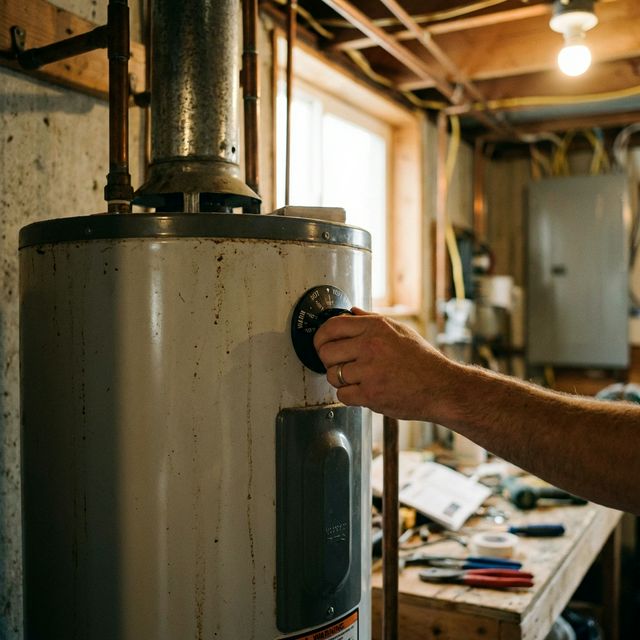
The factory default on most water heaters is 140 degrees Fahrenheit. The Department of Energy recommends 120 degrees. That 20-degree gap matters more than you might expect, both for your safety and your wallet.
I have adjusted water heater temperatures in probably a thousand homes over the years. Most people have no idea what theirs is set to. They moved in, the water was hot, and they never touched the dial. That usually works fine until someone gets scalded, the energy bill spikes, or the tank wears out faster than it should.
The case for 120 degrees
The Department of Energy recommends 120°F as the ideal setting for most homes. Here is why:
Scalding risk drops dramatically. Water at 140°F causes a third-degree burn in about five seconds. At 120°F, it takes more than five minutes of sustained contact. That extra time is the difference between a reflex pull-back and an emergency room visit, particularly for young children and elderly residents.
Energy savings are measurable. Water heating accounts for roughly 18 percent of a home’s energy use, according to Energy.gov. Every 10 degrees you lower the thermostat saves approximately 3 to 5 percent on water heating costs. Going from 140 to 120 saves most households somewhere between $30 and $60 a year.
Mineral buildup slows down. Higher temperatures accelerate mineral precipitation in hard water areas. The calcium and magnesium that form sediment at the bottom of your tank precipitate faster in hotter water. Keeping the temperature at 120°F means less sediment, fewer signs your water heater needs flushing, and a longer tank life.
Pipe corrosion decreases. Hotter water is more corrosive to copper and galvanized steel pipes. This matters less in newer homes with PEX plumbing, but older homes with original copper lines benefit from the lower temperature.
When 140 degrees makes sense
A few specific situations warrant the higher setting:
Dishwashers without a booster heater. Many older dishwashers need 140°F water to sanitize properly. Check your dishwasher’s manual. Most models built after 2010 have a built-in booster that heats incoming water to the necessary temperature regardless of your tank setting.
Legionella concerns. Legionella bacteria can colonize water systems at temperatures between 77°F and 113°F. At 120°F, the bacteria die slowly. At 140°F, they are killed within minutes. Homes with immunocompromised residents, or buildings with long, infrequently used pipe runs (vacation homes, guest bathrooms that sit unused for weeks) may benefit from 140°F to eliminate this risk.
Whole-house recirculation systems. If you have a recirculating pump that keeps hot water available at every tap, the water spends more time in the pipes, cooling along the way. Setting the heater to 130-140°F ensures hot water still arrives at distant fixtures above 110°F.
If you do run at 140°F, consider installing anti-scald mixing valves (also called tempering valves) at bathroom sinks and showers. The valve blends hot and cold water automatically to deliver a safe 120°F at the point of use, while the tank stores water at the higher temperature. They cost about $30 to $50 each and are a straightforward installation.
How to check and adjust your temperature
Gas water heaters
The temperature dial is on the gas control valve near the bottom of the tank. Look for a round knob with markings. Some show actual temperatures. Others use labels like “Warm,” “Hot,” and “Very Hot.”
If yours has labeled settings without numbers:
- “Warm” is roughly 90-110°F
- “Hot” is roughly 120°F
- “Very Hot” is roughly 140-150°F
- “A,” “B,” “C” markings vary by manufacturer, but “B” is often close to 130°F
Turn the dial to your target. Wait 24 hours for the tank to stabilize, then test at a faucet.
Electric water heaters
Electric units have two thermostats: one behind the upper access panel and one behind the lower. Both should be set to the same temperature. Here is how to adjust them:
- Turn off the breaker. Electric water heaters run on 240 volts. Do not skip this step.
- Remove the access panel (usually held by two screws) and pull back the insulation to reveal the thermostat.
- Use a flathead screwdriver to turn the adjustment dial to 120°F.
- Repeat for the lower thermostat.
- Replace the insulation and panels, then turn the breaker back on.
- Wait 3 to 4 hours for the water to reach the new temperature before testing.
Testing your actual temperature
Regardless of what the dial says, verify it at the tap:
- Run hot water at the faucet closest to the water heater for a full two minutes.
- Fill a glass and insert a cooking thermometer.
- Compare the reading to your target.
If the reading does not match the dial, adjust by small increments and retest the next day. Thermostat dials are not precision instruments. The reading at the tap is what actually matters.
What happens at extreme temperatures
Running your water heater too hot or too cold creates different problems:
| Temperature | Risk |
|---|---|
| Below 110°F | Legionella growth zone, lukewarm showers |
| 110-119°F | Minimal bacteria risk, water may feel tepid for washing |
| 120°F | DOE recommended — safe, efficient, comfortable |
| 130°F | Higher energy cost, moderate scald risk |
| 140°F+ | Significant scald risk, faster sediment buildup, higher bills |
| 160°F+ | T&P valve may begin to release, pipe stress, burn risk in seconds |
The energy math
Water heating is one of the largest energy expenses in most homes, second only to heating and cooling. Here is a rough breakdown of annual costs by temperature setting for a 50-gallon tank:
- 120°F: $380-$480/year (gas) or $450-$550/year (electric)
- 130°F: $410-$510/year (gas) or $490-$590/year (electric)
- 140°F: $430-$540/year (gas) or $520-$620/year (electric)
These numbers vary by region, utility rates, household size, and tank efficiency. The point is that 120°F saves real money without sacrificing comfort. If you want to maximize efficiency even further, make sure your tank is properly maintained by flushing it annually and checking your anode rod.
Insulation: the other efficiency lever
If you have adjusted your temperature and still want to reduce costs, look at your hot water pipes and tank. Adding pipe insulation (foam sleeves from the hardware store, about $1 per 6-foot section) to the first 6 feet of hot water piping reduces standby heat loss.
Older tanks without factory insulation can benefit from a water heater blanket, which wraps around the tank and reduces heat loss. Modern tanks built after 2015 have enough factory insulation that adding a blanket provides marginal benefit, but for older units it can save another 7 to 16 percent on water heating costs.
Related guides
- Water Heater Safety: 7 Hazards Every Homeowner Should Know — Full safety checklist
- How to Drain a Hot Water Heater — Step-by-step draining guide
- 5 Signs Your Water Heater Needs Flushing — Know when it is time
- Gas vs. Electric Maintenance Differences — Fuel-specific care tips
Sources
- U.S. Department of Energy — Water Heating — Temperature recommendations and energy savings data
- OSHA — Legionella (Legionnaires’ Disease) — Water temperature guidelines for Legionella prevention
- American Burn Association — Scald burn statistics and prevention