Water Heater Safety: 7 Hazards Every Homeowner Should Know
Prevent burns, gas leaks, and electrical shock around your water heater. A licensed plumber's guide to the safety checks that actually matter.
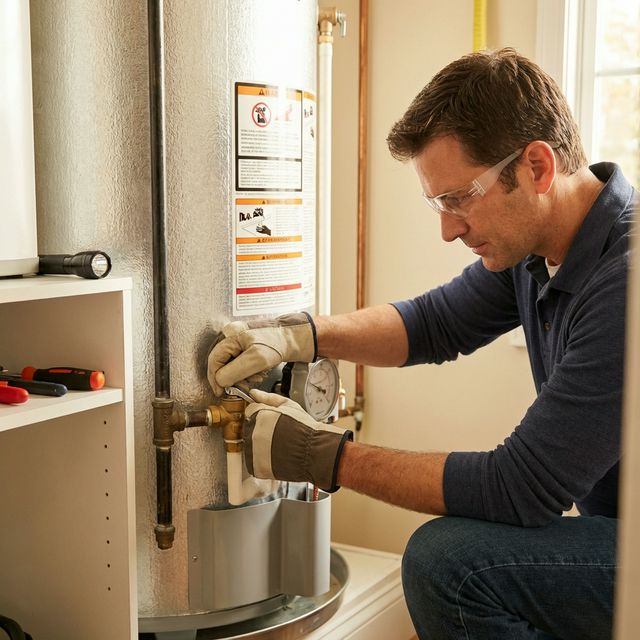
Safety Disclaimer
Water heater maintenance involves working with pressurized systems, scalding hot water, and potentially hazardous electrical or gas connections. Always shut off power (electric heaters) or gas supply (gas heaters) and allow water to cool to a safe temperature before beginning any maintenance. Wear appropriate safety equipment including gloves and eye protection. If you're uncomfortable with any step, contact a licensed plumber.
Your water heater sits in the basement or garage, doing its job quietly for years. Most people forget about it until something goes wrong. The problem is that the thing stores 40 to 80 gallons of water heated to at least 120 degrees, sometimes pressurized, sometimes fueled by natural gas. Ignoring basic safety checks turns a reliable appliance into a genuine household hazard.
I have responded to calls where a failed pressure valve turned a 50-gallon tank into a small rocket. I have seen scalding burns from water that was set 20 degrees hotter than it needed to be. None of these situations were complicated to prevent. They just required someone to check.
Here are the seven hazards I see most often, and what you can do about each one this weekend.
1. Scalding from excessively hot water
Water at 140 degrees Fahrenheit can cause a third-degree burn in about five seconds. At 120 degrees, it takes roughly five minutes of sustained contact to cause serious injury. The difference matters if you have young children, elderly residents, or anyone with reduced sensitivity in their hands or feet.
What to do: Check your thermostat setting. Most gas water heaters have a dial on the gas control valve near the bottom of the tank. Electric units typically have two thermostats behind access panels on the front. Set both to 120 degrees.
If your dial only shows “Warm,” “Hot,” and “Very Hot” without numbers, use a cooking thermometer at the nearest faucet. Run hot water for two minutes, then measure. Adjust the dial in small increments and recheck the next day.
2. T&P valve failure
The temperature and pressure (T&P) relief valve is the single most important safety device on your water heater. If pressure inside the tank exceeds safe limits, this valve opens and releases water through a discharge pipe, usually routed to the floor or outside.
When the valve fails, two things can happen. Either it sticks open and drips continuously, wasting water and creating moisture problems. Or it sticks closed, which means the tank has no safety release.
What to do: Test the valve once a year. Place a bucket under the discharge pipe, then lift the lever on top of the valve for two to three seconds. Water should flow out. Let the lever snap back. The flow should stop.
If no water comes out, the valve is likely seized and needs replacing. If water continues dripping after you release the lever, the valve seat is worn. Both are straightforward replacements that cost about $15 to $20 for the part.
One more thing that people overlook: the discharge pipe should run downward to within six inches of the floor or to an exterior drain. It should never be capped, plugged, or routed upward. I have seen homeowners cap the pipe because it dripped. That defeats the entire purpose of the valve.
3. Gas leaks
Natural gas and propane are treated with mercaptan, the compound that gives them that rotten-egg smell. If you notice that smell near your water heater, do not ignore it.
What to do:
- Do not flip any light switches, use your phone, or create any spark.
- Leave the house immediately.
- Call your gas utility company from outside. They will send someone to check, usually at no charge.
For routine checks, you can inspect gas connections yourself with a spray bottle of soapy water. Brush the solution onto each fitting and connection along the gas supply line. Bubbles mean a leak. Even small leaks need professional attention.
A gas detector mounted near floor level (natural gas is lighter than air, but propane is heavier) gives an extra layer of warning for slow leaks that might not produce an obvious smell.
4. Carbon monoxide from gas water heaters
Gas water heaters produce carbon monoxide during combustion. Normally, the flue and vent pipe carry it outside. Problems start when the vent is blocked, disconnected, or backdrafting due to competing exhaust fans or a poorly designed vent layout.
Signs of backdrafting:
- Condensation or soot stains around the draft hood at the top of the heater
- A persistently yellow pilot flame instead of blue
- Excessive moisture on nearby windows or walls when the heater is running
- CO detector alarms (if you have one installed, which you should)
What to do: Install a carbon monoxide detector within 15 feet of your water heater if you do not already have one. Inspect the vent pipe annually for disconnections, holes, or sagging sections. Make sure the horizontal run slopes upward at least 1/4 inch per foot toward the exterior vent cap.
If your CO detector goes off, treat it like a gas leak: get out and call 911 or your fire department.
5. Electrical hazards on electric water heaters
Electric water heaters run on 240 volts, which is plenty to cause a serious or fatal shock. The risk is highest during maintenance when you are working near water and metal components.
What to do before any work on an electric unit:
- Turn off the dedicated breaker at your panel. It is usually a 30-amp double-pole breaker labeled “Water Heater” or “WH.”
- Use a non-contact voltage tester at the wire connections inside the upper access panel to confirm power is actually off. Breaker labels are wrong more often than you would expect.
- Never assume that turning off the breaker is enough if the label is unclear. Test it.
If you are draining your water heater or replacing a heating element, always kill the power first. Running a dry element with the power on will burn it out within minutes, and you could shock yourself in the process.
6. Sediment-related overheating
Sediment buildup at the bottom of the tank acts as insulation between the burner (or lower element) and the water. The burner fires longer to push heat through the sediment layer, and the bottom of the tank gets much hotter than it was designed to.
Over time, this overheating weakens the steel. You may hear popping or rumbling sounds when the burner fires. Those sounds are steam bubbles escaping through the sediment. It is your tank telling you it is working too hard.
What to do: Flush your water heater annually. If you live in a hard water area, twice a year is better. The process takes about an hour, costs nothing beyond a garden hose, and is the single most effective thing you can do to extend your tank’s life. If you are not sure whether it is time, check these signs your water heater needs flushing.
7. Earthquake and tip-over risk
In earthquake-prone areas, an unsecured water heater can topple. A falling 60-gallon tank full of hot water weighs over 500 pounds. Beyond the impact damage, a toppled gas unit can sever the gas line and crack the flue, creating simultaneous fire and carbon monoxide risks.
What to do: Strap the tank to the wall studs with earthquake straps. Most hardware stores sell kits for under $20. Install two straps: one in the upper third and one in the lower third of the tank. This is code-required in California and several other states, but it is a good idea anywhere the ground shakes.
A simple annual safety checklist
You do not need a plumber for routine safety checks. Set a reminder once a year, ideally when you replace your HVAC filter or do other seasonal home maintenance.
| Check | Time needed | Tools |
|---|---|---|
| Thermostat at 120°F | 2 minutes | Thermometer |
| T&P valve test | 2 minutes | Bucket |
| Gas line soap test | 5 minutes | Spray bottle, dish soap |
| Vent pipe inspection | 5 minutes | Flashlight |
| CO detector test | 1 minute | None |
| Earthquake straps tight | 1 minute | Wrench |
| Area clear of flammables | 2 minutes | None |
Keep the area around your water heater clear. No paint cans, no cardboard boxes, no gasoline containers. Gas water heaters have an open flame at the bottom. Three feet of clearance on all sides is the recommendation, though many utility rooms make that tight. Do the best you can, and at minimum keep flammable liquids in a different room entirely.
When to call a professional
Some jobs belong to a licensed plumber or HVAC tech:
- Gas odor that persists after shutting the gas valve — call the gas company
- T&P valve that keeps popping open — may indicate a failing thermostat or excessive supply pressure
- Rust-colored water from the hot side only — likely a corroding anode rod that needs replacement
- Standing water under the tank — could be a failing tank, which is not repairable
- Breaker keeps tripping — possible short in the element or thermostat wiring
Most of these are straightforward service calls. The expensive ones are the emergencies that happen because nobody checked.
Related guides
- How to Drain a Hot Water Heater — Step-by-step draining guide
- How to Flush a Water Heater — Complete flushing guide with the vinegar method
- 5 Signs Your Water Heater Needs Flushing — Know when it is time
- When to Replace Your Anode Rod — Protect your tank from corrosion
- Gas vs. Electric Maintenance Differences — Fuel-specific care tips
Sources
- U.S. Consumer Product Safety Commission — Water Heater Safety — Federal safety recommendations for residential water heaters
- American Red Cross — Home Fire Safety — Fire prevention guidelines
- U.S. Department of Energy — Water Heating — Temperature settings and energy efficiency recommendations